
If your necklace's toggle bar will not go through its ring, check the angle and the room around the clasp before pulling harder. A bar-and-ring toggle closes when you pass the bar end-first through the opening, then turn it across the ring. You need enough slack to make that turn. If it will not pass without force, stop and ask the seller to check the fastening.
Turn the bar end-first, not sideways
Take the necklace off and support it on a soft, clean surface so you can see both parts. Hold the ring and bring one end of the bar toward its opening. Pass the whole bar through, then turn it so it rests across the ring, with both ends beyond the opening. Follow any instructions supplied with your necklace.
A bar that spans more than the ring's width is not, by itself, a manufacturing mistake. That overlap helps keep a toggle closed. Trying to push the bar through while holding it sideways works against the shape of the fastening. Do not enlarge the ring or bend the bar to make the attempt easier.
Check what stops the bar from turning
Look at the connection beside the bar. Can you turn the bar toward the opening, or does a nearby bead, thick chain end or decoration get in the way? Fire Mountain Gems and Beads explains, in its toggle-clasp guidance for jewelry makers, that extra connecting length or smaller end beads can give a bar room to pass through the ring. The important point for a buyer is that the surrounding construction matters too.
If you can close the necklace off your neck but cannot bring the ends together while wearing it, check the fit and ask the seller how the design should fasten. Do not pull the chain tight around your neck to gain the last bit of reach. Closing it on a surface also does not establish that it will fit you or stay closed during wear.
Before ordering, ask to see the clasp open
A photograph of a closed toggle can hide the connection behind the bar. Ask for an open-clasp view or a short demonstration using the exact necklace you want to order. A useful question is: "Can you show how the bar passes through the ring, including the links next to it?" If you struggle with small fastenings, ask about the parts you would need to hold rather than relying on an "easy closure" label.
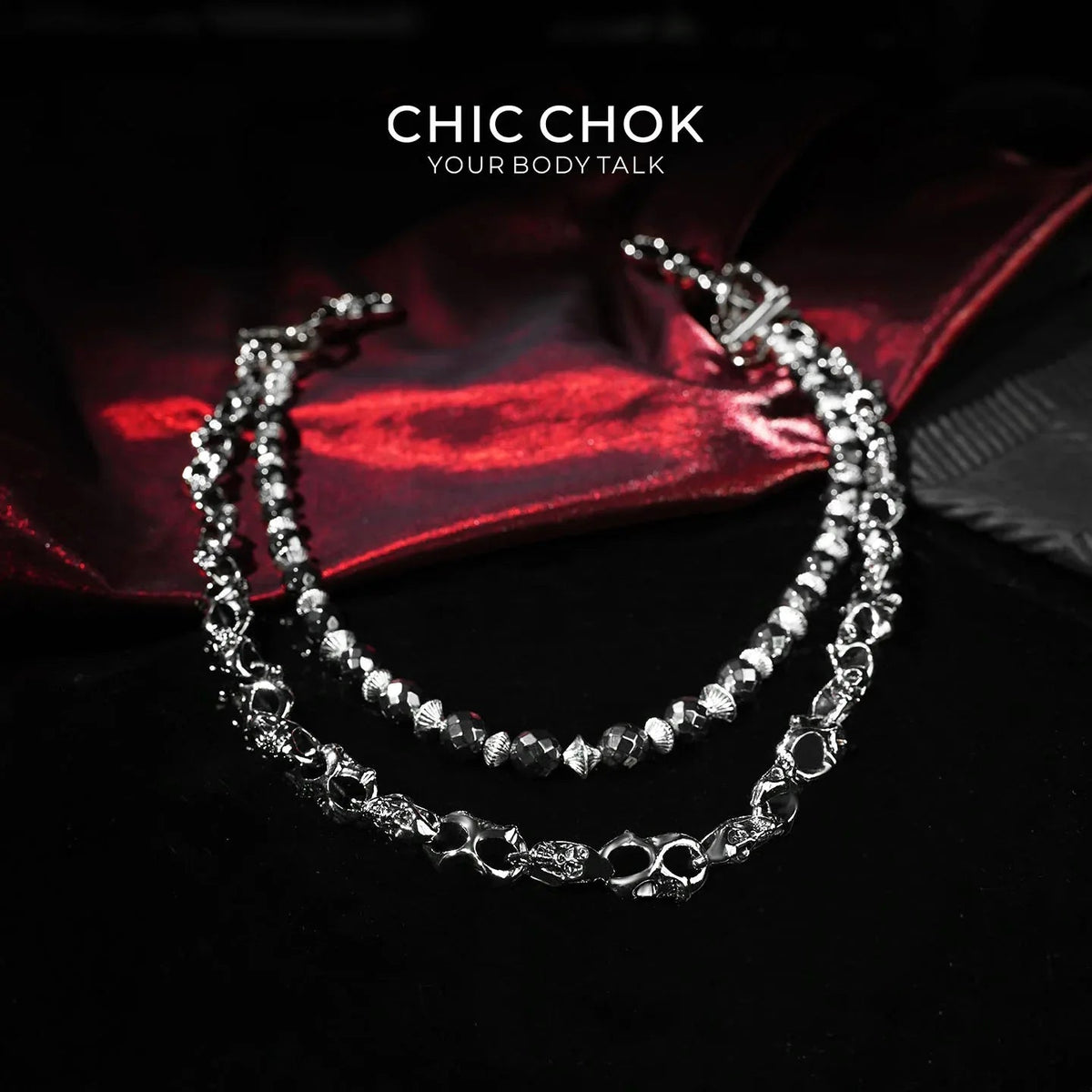
CHICCHOK's Crimson Heart necklace, Black option uses a functional front OT toggle above a faceted resin heart. Here, you would fasten the necklace at the front and leave the clasp visible as part of the design. The catalog photograph shows that arrangement; it does not prove how much turning room you will have or how the fastening will feel in your hands. Ask for those details before choosing it for easier access.

Stop if the parts need forcing
If you cannot pass the bar through with the necklace off and its ends free, send the seller clear pictures of the open clasp and the point where it catches. Ask them to confirm the intended operation and whether the parts need inspection. A damaged bar, a distorted ring or a fastening that opens during ordinary wear needs attention before you wear it again.
Jewelry-making instructions sometimes describe adding links or replacing components. Those changes alter a finished necklace. Have the maker or a jeweler assess it instead of adding an improvised extender, filing metal or squeezing the ring with pliers.
Related CHICCHOK Guides
For the separate question of where the necklace should sit, read our statement-necklace fit guide. Our layered Y-necklace guide covers the shape and outfit choices.
Sources
- Fire Mountain Gems and Beads: All About Clasps, for bar-and-ring operation.
- Fire Mountain Gems and Beads: Clasp, Toggle, for clearance beside the bar. This is jewelry-making advice, not a wear trial of a CHICCHOK necklace.
- Fire Mountain Gems and Beads: Lengthening a Choker, for the bar-and-ring size relationship. Product construction and the catalog image were checked against CHICCHOK's current listing on November 7, 2026.