
If your necklace catches your hair, first work out when it happens: while you close the clasp, or after you let your hair down. Keep your hair out of the fastening while you put the necklace on. If it catches again during wear, take the necklace off and look at the clasp, any extension chain and the surrounding links. Changing the dressing order will not repair damaged hardware.
Did you close the clasp around a strand?
Before fastening a necklace behind your neck, lift your hair clear with a loose clip or ask someone to hold it aside. Close the fastening using the maker's instructions, then check that no strand crosses the opening before letting your hair down. Trying to close a small clasp through a curtain of hair makes it harder to see what you have caught.
If a strand is already trapped, stop pulling the necklace around your neck. Ask someone who can see the fastening to help open it and lift it away from the hair. If you cannot release it without pulling, get in-person help rather than twisting the clasp or tugging harder. You do not need to establish the cause while the necklace is still on.
Find the catching point before replacing the whole necklace
Once you have taken it off, lay the necklace on a clean, soft surface with the back fastening and any loose end spread out. Look for the place where hair remains caught. A strand inside the clasp opening suggests a different check from hair wound around the last link of an extension chain.
Compare the fastening in its normal closed position with the seller's product photos or instructions. If you can see a bent part, an opening that does not close as shown, or a projecting damaged link, stop wearing it and ask the seller or a jeweler to inspect it. Do not squeeze a clasp shut with pliers, file it, or cover it with glue to hide the problem.
You may find no visible defect. Note whether the same spot catches again after you have fastened it with your hair held clear. That is useful information to give the seller; it is not a reason to keep wearing a combination that pulls your hair.
Check the extender in the position you would use
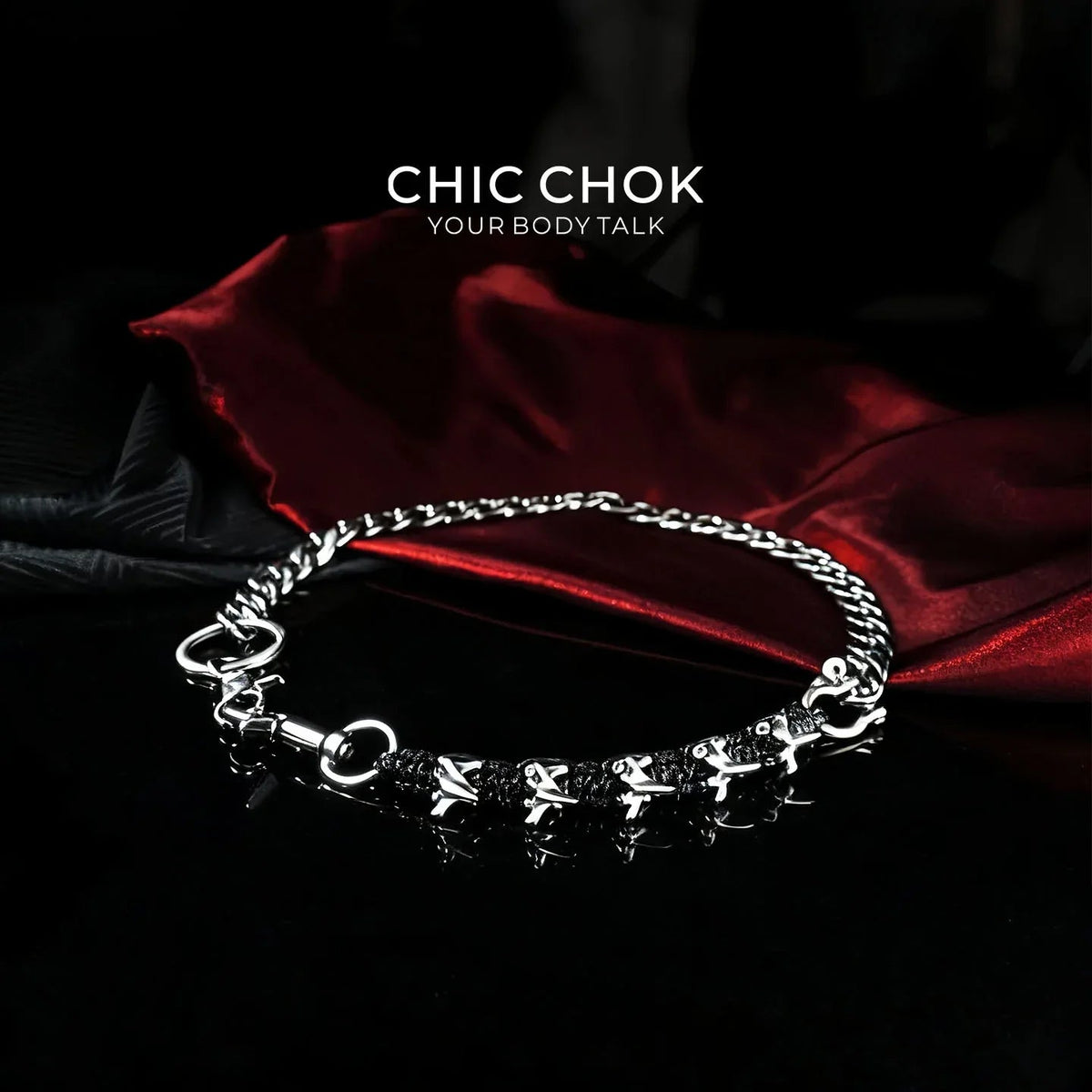
On an adjustable chain necklace, inspect the fastening at your chosen length. If you fasten into a link partway along an extender, check where the unused end hangs. A front-facing product photo can leave that loose section out of view. Ask for a rear view with the necklace closed at the setting you expect to wear.
For a low ponytail, compare the ponytail's resting position with that fastening and loose end. With your hair down, check the back of your neck after you settle your coat collar or scarf. Put those layers on with your hair lifted away first. If the hardware still catches when you lower it, choose another necklace or wear your hair clear of that spot for the occasion.
Do not tighten the necklace just to use up the extension chain. Fit still comes first. Our statement-necklace fit guide covers checking head and shoulder movement before keeping a design for everyday wear.
A front closure changes access, not the need to check fit
A necklace designed to fasten at the front gives you another arrangement to compare. You can keep your hair behind your shoulders while looking at the fastening in front of you. You still need to inspect the back and sides, and the seller must confirm how the closure operates. Moving a rear clasp to the front on a different necklace is not the same as buying a front-fastening design.
CHICCHOK lists Black Pearl as a front-closure, non-adjustable choker. Its current option asks you to note your size; it does not provide a selectable fitting range. Before ordering, ask how your measurement determines the finished closed circumference and confirm the band width. Do not assume you will be able to loosen it afterward.

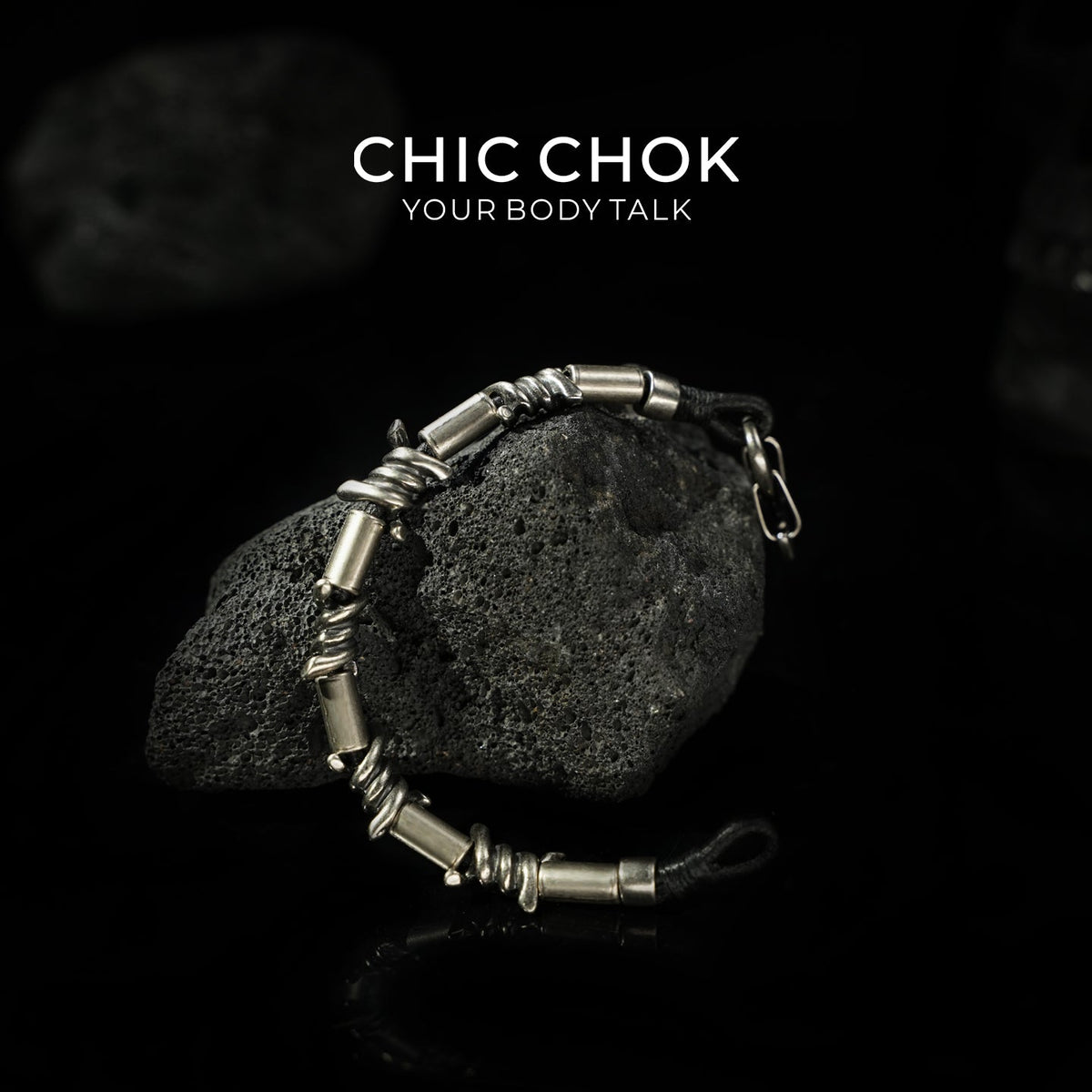
The catalog photo shows the front hardware. It does not demonstrate how the choker behaves against long hair or prove that it cannot catch. Treat it as an example of a different fastening position, not a tested solution to this problem.
Ask for the rear view before you buy
Send the seller a specific question: “Could you show the necklace closed at my intended length, including the clasp and the unused end? My hair rests at the back of my neck, so I need to see that area.” For a fixed-size band, ask to see the full inside and outside of the closed piece instead of an extender setting.
Choose from that information and the fit you need. A larger decorative front, a shorter chain or a different chain name alone cannot tell you whether your hair will catch. For the broader choice between close-fitting bands and necklace silhouettes, see our guide to choker styles.
Product information
Product details above come from the current CHICCHOK Black Pearl listing and its size option, checked November 13, 2026. The photograph is a catalog image, not a hair-catching demonstration. The handling suggestions describe checks you can make; they are not results from a wear trial.